What Are Rich Snippets — And How Do You Get Them?

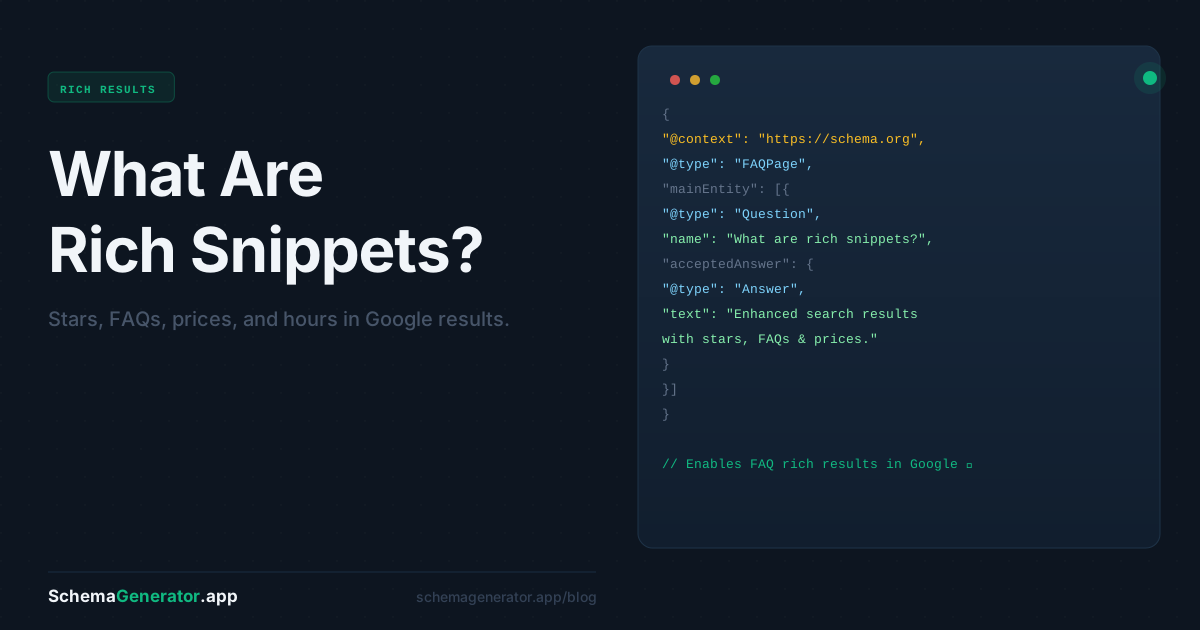
You've seen them a hundred times without knowing what they're called.
A Google result showing five gold stars and "4.8 · 312 reviews." A recipe with cooking time and a photo right in the search results. An FAQ that expands inline before you even click. A product listing showing the price and whether it's in stock.
Those are rich snippets. And they're not random — they're earned.
The plain-English definition
A rich snippet is an enhanced search result. Instead of just a title, URL, and description, it shows additional structured information pulled directly from your website.
The "rich" part means visually richer than a standard blue link. More information, more visual weight, more reasons for someone to click.
Standard result:
Joe's Plumbing Brussels joes-plumbing.be Professional plumbing services in Brussels. Available 7 days a week...
Rich result:
Joe's Plumbing Brussels joes-plumbing.be · ★★★★★ 4.9 · 87 reviews Open now · Mon–Sat 8:00–19:00 · +32 2 123 45 67
Same page. Completely different impression.
Why rich snippets matter
The honest answer: they don't directly move your ranking position. Google has been clear that structured data isn't a ranking signal in the traditional sense.
But they change everything around your ranking.
They take up more space. A result with star ratings, an image, or an expanded FAQ visually dominates the page. Users notice it first.
They communicate trust instantly. Star ratings next to your business name signal social proof before anyone reads a single word of your copy.
They improve click-through rates significantly. More information in the result means users self-qualify before clicking — and those who do click are more likely to be genuinely interested. Studies have shown rich results can increase CTR by 20–30%.
They future-proof your content. Google's AI Overviews, voice search answers, and featured snippets all rely heavily on structured data. If your content isn't marked up, it's less likely to get pulled into these newer search surfaces.
The most common types of rich snippets
Not every page qualifies for every rich result type. Here are the ones most relevant for business websites:
Star ratings (Review / AggregateRating) Shows a star rating and review count beneath your result. Applicable to products, services, local businesses, and recipes. One of the highest-impact rich result types for click-through rates.
FAQ dropdowns If your page has a FAQ section, you can mark it up so questions expand directly in the search result — without the user clicking through. Significantly increases the screen space your result occupies.
Product information For e-commerce: price, availability ("In stock"), and sometimes an image. Essential for product pages competing in shopping-oriented searches.
Local business info Opening hours, phone number, address, and price range shown inline. Critical for local SEO — this is what makes your result look like a complete business listing rather than just a link.
Article metadata Publication date, author, and article type. Signals freshness and credibility for blog posts and news content.
Breadcrumbs Your site's navigation path shown in the URL line: yoursite.com › Blog › SEO Tips. Clean, professional, and helps users understand where a page sits in your site structure.
So how do you actually get them?
Here's the part most articles skip over.
Rich snippets aren't something you apply for or request. Google decides whether to show them based on one thing: whether your page has valid schema markup — structured data code that tells Google exactly what your content contains.
No schema markup → no rich snippets. It's that simple.
The process is:
- Add the right schema type to your page. A review page needs AggregateRating schema. A FAQ section needs FAQPage schema. A product page needs Product schema.
- Make sure the markup is valid. Errors in your JSON-LD will cause Google to ignore it entirely.
- Wait for Google to re-crawl your page. This typically takes a few days to a few weeks.
- Verify with Google's Rich Results Test. This free tool tells you exactly which rich results your page is eligible for.
The catch: not every page will get them
Google doesn't guarantee rich snippets even when your markup is valid. It makes its own judgment about whether to display them based on:
- Content quality and relevance
- Whether the structured data accurately reflects the page content
- The specific search query being made
- How competitive the search result page is
What you can control is having the markup in place and making sure it's accurate. After that, it's Google's call — but you can't get rich snippets without the markup at all.
The fastest way to add schema markup
Writing JSON-LD by hand is tedious and error-prone. A single misplaced bracket invalidates the whole block.
SchemaGenerator.app generates valid, ready-to-paste schema markup in under two minutes:
- Paste your page URL
- The AI identifies the right schema type and extracts your content
- Review, edit if needed, and copy
- Paste it into your site's
<head>tag
The output is pre-validated — no guessing, no debugging. Free to start with 20 schemas per month, no credit card required.